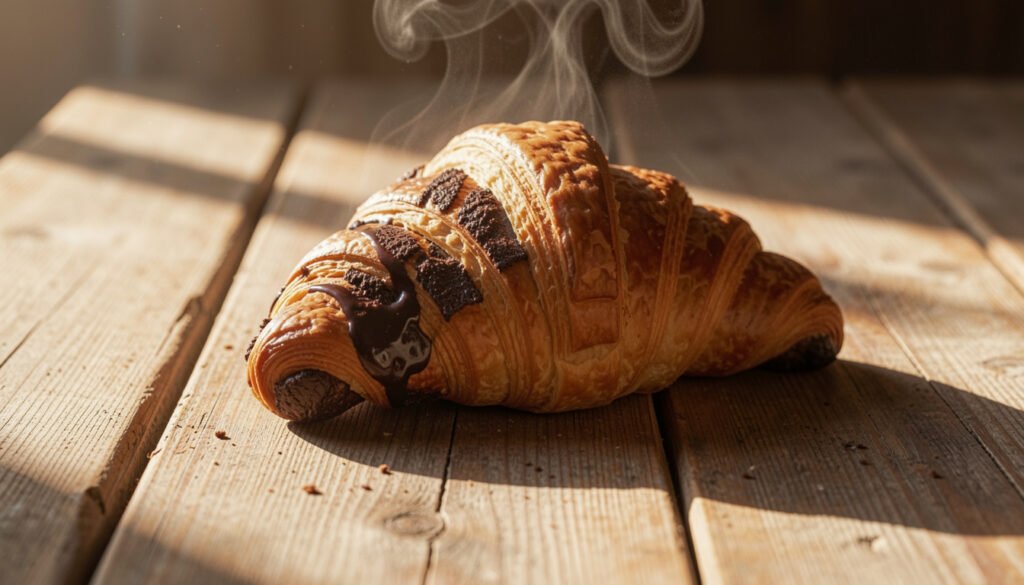

A chocolate croissant is a popular French pastry made from rich laminated dough wrapped around high quality dark chocolate. In France, people call this delicious morning treat pain au chocolat. Bakers construct the pastry by folding cold butter into yeast dough many times. This process builds dozens of flaky layers that puff up high in the hot oven. Every single bite offers a crisp outer shell with a soft, buttery center filled with warm sweet cocoa.
Many people enjoy eating a fresh chocolate croissant for breakfast alongside hot coffee or tea. You can easily find these golden baked goods in bakeries and cozy cafes around the world today. While classic croissants feature a distinctive crescent shape, this sweet version is usually rolled into a neat rectangle. The rich dark cocoa bars inside melt during baking, creating a soft gooey surprise right at the very middle of every pastry.
| Pastry Profile | Quick Details |
| Official Name | Pain au Chocolat |
| French Origin | Paris, France (19th Century) |
| Core Ingredients | Butter, Flour, Yeast, Sugar, Dark Chocolate |
| Dough Type | Laminated Puff Pastry |
| Best Served With | Fresh Espresso or Cappuccino |
| Prep Time | 3 Hours (Including Chilling) |
| Bake Time | 15 to 20 Minutes |
The Delicious History of Pain au Chocolat
The story of the chocolate croissant actually began back in the early nineteenth century in bustling Paris. An Austrian military officer named August Zang opened a popular Viennese bakery in France around 1838. He introduced locals to a traditional crescent roll from his home country known as the Kipferl. French bakers loved the concept and quickly began experimenting with their own rich puff pastry dough and sweet fillings.
Over time, local bakers added rich cocoa batons into the laminated dough rectangles to create pain au chocolat. This new creation grew wildly famous across European cafes as a staple morning item for busy workers. Today, the legendary chocolate croissant represents a true masterpiece of French baking tradition enjoyed by millions daily. The simple combination of crisp butter layers and sweet melted cocoa remains timeless across every generation of food lovers.
Traditional French Baking vs Modern Pastry Making
Traditional French pastry chefs spend years mastering the delicate art of making an authentic chocolate croissant by hand. Classic methods require rolling fresh butter into chilled yeast dough multiple times with extreme precision and care. Bakers keep the dough cold between folds so the delicate butter layers do not melt prematurely. This slow, patient technique creates the signature airy honeycomb structure inside every golden baked roll.
Modern home bakers often use simplified techniques and modern kitchen tools to speed up the classic process. Some people even buy pre-made puff pastry dough at the grocery store for quick morning treats. However, taking the time to craft a homemade chocolate croissant from scratch yields far superior flavor and texture. Nothing compares to the incredible smell of real butter and rich cocoa baking in your warm home kitchen.
Essential Ingredients for the Best Homemade French Pastry
Making an amazing chocolate croissant requires using simple, high-quality ingredients that you can buy at any local store. Always choose European-style unsalted butter because it contains a higher fat content than standard American butter. High fat butter creates lighter, flakier dough layers and delivers a much richer flavor profile. You will also need strong bread flour, instant yeast, whole milk, granulated sugar, and fine sea salt.
The sweet filling inside your homemade chocolate croissant needs special baking chocolate sticks called chocolate batons. These specific cocoa bars contain less cocoa butter, which prevents them from melting completely away during high heat baking. Standard chocolate chips often melt too fast and leak out onto your baking tray during the baking process. Using proper baker batons keeps the sweet rich centers intact inside your crispy warm pastries.
Step-by-Step Guide to Making Flaky Laminated Dough
Creating laminated dough for a homemade chocolate croissant starts with making a smooth, supple yeast dough base. Knead your dough gently, wrap it tightly in plastic, and let it chill inside the refrigerator. Next, roll cold butter between parchment paper sheets until you form a flat, flexible square block. Place the cold butter block on top of your rolled dough and fold the edges over to seal it completely.
Roll the dough package flat and complete a series of three letter folds with cold chilling rest periods between each turn. This delicate folding process creates dozens of paper-thin layers of dough and cold butter stacked together seamlessly. After the final chill, roll out the layered sheet and slice it neatly into even rectangles. Place two chocolate batons on each piece, roll them up tight, and let them rise until puffy.
Choosing the Perfect Baking Chocolate for Your Recipe
Selecting the right cocoa filling determines the final taste and texture of your fresh baked chocolate croissant. Professional French pastry chefs usually prefer dark chocolate containing around 44 to 55 percent cocoa solids. This specific cocoa level provides a deep chocolate flavor that balances out the rich, buttery pastry layers. Avoid using ultra-sweet milk chocolate because it overpowers the subtle taste of the fresh baked dough.
If you cannot find specialized baking batons, you can chop high-quality dark chocolate bars into long thin strips. Look for chocolate brands that use real cocoa butter rather than cheap vegetable oils or artificial additives. High quality dark chocolate melts smoothly inside the warm pastry without turning grainy or greasy. Investing in great chocolate elevates your home baking results from simple snacks to bakery quality treats instantly.
Expert Secrets for Achieving That Golden Crispy Crust
Achieving a shiny golden crust on your homemade chocolate croissant requires a quick brush of fresh egg wash before baking. Whisk one whole egg with a tablespoon of whole milk or heavy cream until completely smooth. Brush a light layer over the top of each risen roll just before putting them into the hot oven. Be careful not to let the egg wash drip down the sides, or it might seal the flaky layers shut.
Bake your pastries in a fully preheated oven at 400 degrees Fahrenheit for about fifteen to twenty minutes. The intense oven heat causes the water inside the cold butter layers to evaporate quickly into steam. This steam pushes the thin dough layers apart while the egg wash bakes into a shiny mahogany crust. Allow your fresh chocolate croissant to cool slightly on a wire rack so the interior sets properly.
Common Mistakes to Avoid When Baking Pastries
One big mistake home bakers make when crafting a chocolate croissant is letting the butter get too warm during rolling. Warm butter melts into the dough layers, destroying the flaky honeycomb structure you worked hard to build. If your dough feels soft or sticky at any point, place it back inside the fridge immediately to firm up. Keeping your workspace cool prevents common lamination failures and keeps your pastry layers crisp and distinct.
Another common error is under-baking your pastries because the tops look dark before the centers finish cooking through. Dough that is under-baked inside turns dense, doughy, and heavy rather than light, airy, and hollow. If your chocolate croissant browns too quickly on top, simply cover it loosely with aluminum foil during the final minutes. Always let your baked pastries rest on a cooling rack so trapped steam does not make the bottoms soggy.
Health and Nutrition Facts About Breakfast Treats
While a warm chocolate croissant tastes delicious, it is best enjoyed as an occasional sweet treat rather than an everyday meal. One standard pastry contains around 300 to 400 calories, depending on its overall size and butter content. It provides fast energy from carbohydrates alongside fat from the European butter and antioxidants from dark cocoa. Enjoying your breakfast pastry alongside fresh fruit or protein helps balance out your morning energy levels effectively.
You can also make slightly lighter versions of this classic recipe right inside your own home kitchen. Using dark chocolate with a higher cocoa percentage adds beneficial flavonoids and reduces overall refined sugar content. You can also control your portion sizes by shaping smaller mini pastries for quick afternoon snack options. Eating a freshly baked chocolate croissant slowly lets you savor every rich bite while practicing balanced eating habits.
Best Coffee Pairings for a Delightful Morning Snack
Nothing pairs better with a warm chocolate croissant than a hot cup of freshly brewed specialty coffee. The dark roast coffee notes cut through the rich butter and complement the sweet melted dark cocoa center. A classic espresso or a creamy cappuccino serves as the traditional morning choice in busy European cafes. The warm milk foam in a cappuccino softens the crunchy pastry crust for a truly comforting morning experience.
If you prefer cold beverages, try pairing your chocolate croissant with a smooth iced cold brew coffee. The dark, subtle sweetness of cold brew highlights the cocoa flavor without overwhelming your palate with excess sugar. Light tea lovers can also enjoy this classic pastry alongside a warm cup of Earl Grey or black tea. Experiment with different drink pairings to discover your personal favorite way to enjoy this iconic French snack.
How to Store and Reheat Warm Baked Goods Properly
Store any leftover chocolate croissant at comfortable room temperature inside an airtight container or paper bakery bag for two days. Avoid keeping fresh pastries inside the refrigerator because cold temperatures cause baked starch to go stale much faster. If you need to store them longer, wrap each unbaked or baked pastry tightly and freeze for up to a month. Frozen baked goods make fantastic quick breakfasts whenever you crave a sweet morning treat.
To reheat a day-old chocolate croissant, place it inside a preheated oven or toaster oven at 350 degrees Fahrenheit. Warm the pastry for roughly three to five minutes until the outer crust turns crisp and the chocolate warms up. Avoid using a microwave oven because it turns flaky laminated dough tough, soft, and unpleasantly gummy. A quick warm turn in the oven restores that fresh bakery crunch and delightful melted center easily.
Frequently Asked Questions About French Breakfast Pastries
Is a chocolate croissant the same thing as pain au chocolat?
Yes, pain au chocolat is simply the original French name for a chocolate croissant. While shaped as a rectangle instead of a crescent, both use the exact same flaky butter dough base.
Why did my butter leak out during baking?
Butter leaks out when the dough rises too warm or the oven temperature is not hot enough. Ensure your dough stays cold and preheat your oven completely before baking your pastries.
Can I use chocolate chips inside my pastry dough?
Standard chocolate chips work in a pinch, but specialized baking chocolate batons yield far better overall results. Batons hold their shape better and deliver a smoother melted center without burning.
How long does it take to make pastries from scratch?
Making laminated dough takes about three to four hours from start to finish due to resting times. Most of that time is hands-off waiting while the dough chills inside your refrigerator.
Can I make the dough ahead of time and bake later?
Yes, you can shape your pastries the night before and let them rest covered in the fridge overnight. Simply bring them to room temperature the next morning and bake as directed.
What makes laminated dough puff up so high in the oven?
Water trapped inside the layered cold butter turns into steam during baking. This expanding steam lifts the thin dough layers apart, creating an airy honeycomb structure inside every roll.
Final Thoughts on Baking Pain au Chocolat at Home
Mastering the iconic chocolate croissant brings the delightful charm and incredible aromas of a authentic French bakery into your kitchen. While lamination requires patience and practice, the delicious reward of fresh flaky pastry makes every step completely worth it. Gather your simple ingredients, keep your butter cold, and enjoy crafting these classic golden baked treats for your family. Share your homemade pastry victories with friends and start your morning with a warm, crispy slice of baking perfection.